
 English
The hidden risk of cutting operational support too early
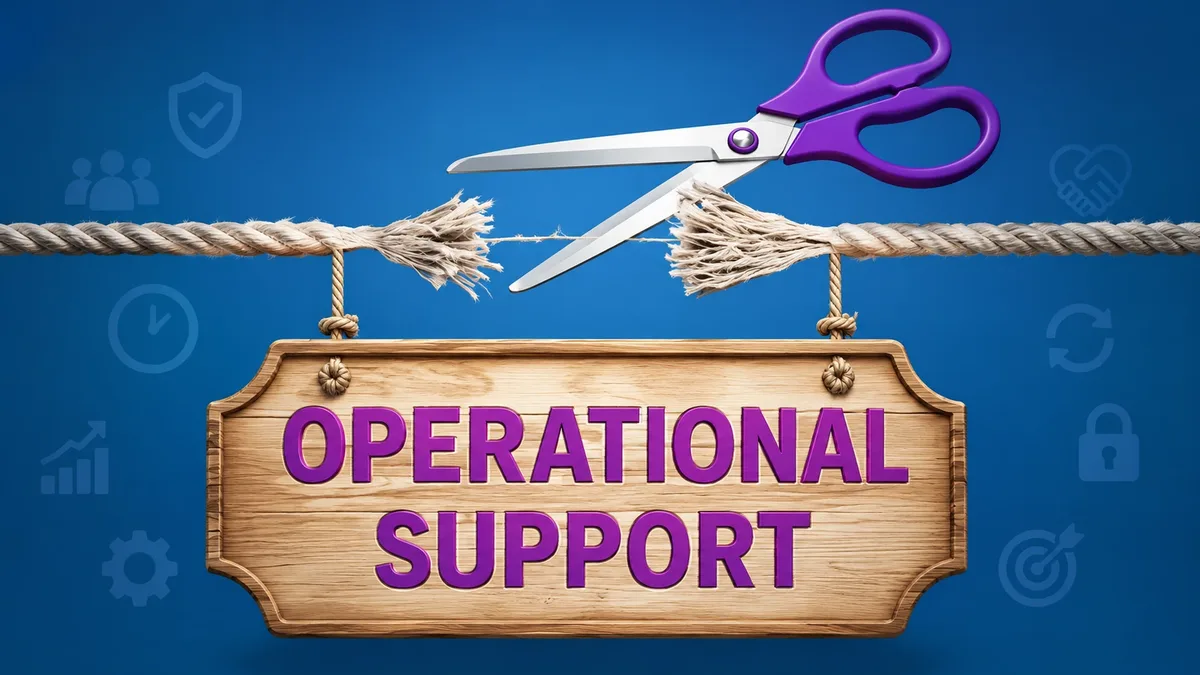
When times are uncertain, it's only natural to look closely at your business expenses. Every subscription, supplier and service comes under review, and it's sensible to ask where savings can be made. For many business owners, operational support is one of the first things to be questioned because, unlike sales or marketing, it doesn't appear to generate revenue directly. On paper, it looks like a cost. In reality, it is often protecting the very things that keep a business running smoothly.
>One of the biggest misconceptions about operational support is that it's simply about completing tasks. Of course, there are tasks involved, but that's only part of the picture. Good operational support provides continuity. It keeps projects moving, clients informed, deadlines on track and communication consistent. It creates structure behind the scenes so that the business owner can focus on leading the business instead of constantly reacting to it.
I've seen this from both sides. During my fifteen years as an Executive Assistant, I worked alongside senior leaders in a variety of international businesses, anticipating problems before they became crises and ensuring that countless moving parts came together seamlessly. Over the past ten years, I've brought that same approach to my own business, supporting entrepreneurs across multiple countries, languages and industries. What I've learned is that the most valuable work is often the work nobody notices because everything simply works.
When operational support is removed, the work itself doesn't disappear. Someone still has to organise the travel, follow up on outstanding actions, coordinate suppliers, manage inboxes, prepare documentation and keep projects moving forward. More often than not, those responsibilities return to the business owner, who is already juggling sales, client delivery, business development and the countless decisions that come with running a company.
At first, that can even feel reassuring. You're back in control, reading every email yourself and checking every detail before it goes out. But that sense of control rarely lasts. Before long, your attention is being pulled in so many different directions that the strategic work – the work that only you can do – starts to compete with routine administration for your time and energy.
Some of the most important contributions operational support provides are also the easiest to overlook because they rarely appear on a task list. It's the associate who notices that a client's tone has changed over the last few emails and suggests picking up the phone. It's the project manager who spots that two deadlines are about to clash before anyone else has realised. It's the person who remembers that a supplier needs confirming, that a venue still hasn't replied, or that an important follow-up has slipped through the cracks. These aren't dramatic moments, but they are often the difference between a business that feels calm and one that constantly feels as though it's firefighting.
This becomes even more important when your business operates across languages and cultures. Communication isn't simply about translating words; it's about understanding expectations, tone and context. The same email can be interpreted very differently depending on the country, the culture or even the language in which it's written. A message that feels perfectly acceptable in English may come across as abrupt in French, while a delayed response that seems insignificant to one team may leave an international client wondering whether they've become less of a priority.
Working with multilingual businesses has shown me just how valuable it is to have someone who understands those nuances. We've often reviewed emails before they're sent, suggested a different approach to a difficult conversation or picked up on a cultural misunderstanding before it affected the client relationship. Those interventions are rarely visible, but they help build the trust that international businesses depend upon.
There's another cost that's much harder to measure, and that's the mental load carried by the business owner.
Every unanswered email, every invoice waiting to be sent, every reminder sitting in your head and every small decision you need to make occupies space that could be spent growing the business. When you're trying to hold everything together yourself, it's not simply that there's more work to do; it's that your attention becomes fragmented. You spend your day switching between strategic thinking and routine administration, never fully focusing on either.
I'm not suggesting that operational support should never be reviewed. Every business goes through periods where costs need to be examined carefully, and sometimes difficult decisions have to be made. However, before reducing support, it's worth asking a different question. Rather than asking whether you can afford to keep that support, ask yourself what will happen if it's no longer there. Who will take on those responsibilities? Who will notice the details that currently prevent problems from arising? And if the answer is that it will all come back to you, what impact will that have on your time, your energy and your ability to lead the business?
Over the years, I've become convinced that the best operational support doesn't simply save time. It creates space for better decisions, stronger relationships and more sustainable growth. Those benefits may never appear on a spreadsheet, but they are often the reason a business continues to deliver an excellent client experience, even during challenging periods.
Before deciding that operational support is a luxury, consider what it's quietly making possible every single day. Sometimes the most valuable investment in your business isn't the one that generates the most visible return; it's the one that allows everything else to work as it should.